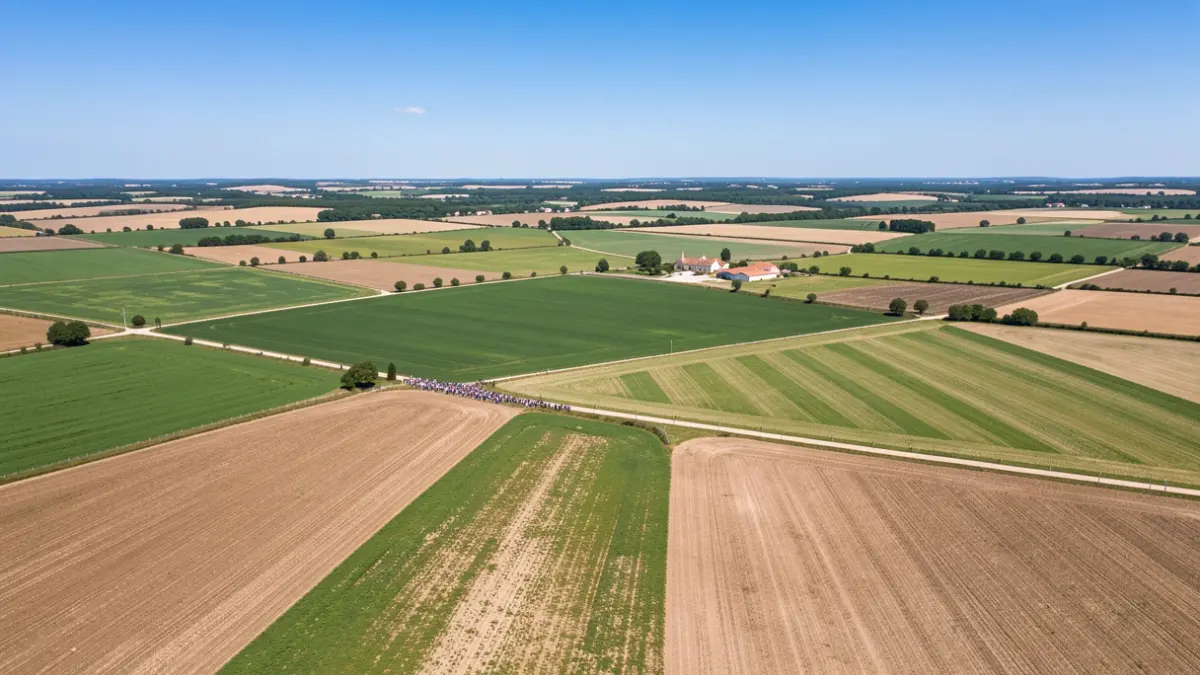
Between 2022 and 2025, the COTERRA project brought together researchers, farmers, and stakeholders from the Nord-Comminges territory, particularly around the areas of Boulogne-sur-Gesse, Aurignac, and L’Isle-en-Dodon. The main objective was to enhance the autonomy of agricultural holdings by further leveraging collective dynamics.
Co-led by UMR DYNAFOR and ACVA of Boulogne-sur-Gesse, the project adopted a participatory action-research approach, directly involving farmers and local actors in knowledge construction. The Chambre d’agriculture de la Haute-Garonne was a key partner in this process.
Autonomy was addressed holistically, considering agronomic, economic, social, and territorial dimensions. Diagnostics revealed common concerns such as soil cover, fertility, erosion, and fodder autonomy.
Experiments on plant covers, conducted in 2023-2024 and 2024-2025, showed their potential for producing fodder, acquiring nitrogen and carbon, and limiting soil compaction. These results highlight the value of considering covers at the farm system level.
The project also produced tools for agricultural advisory services, including a generic autonomy diagnostic tool and a soil observation guide. These resources aim to translate research findings into practical tools for farmer support.
The importance of the collective as a lever for autonomy was emphasized, studying forms of cooperation among farmers for sharing knowledge, equipment, and resources. This approach broadens the concept of autonomy beyond the individual farm.
In September 2024, the GIEE 'Green soils all year round' was established, continuing the collective dynamic around soil cover, fodder autonomy, and water use. The Chambre d’agriculture de Haute-Garonne leads this group.
Although COTERRA has concluded, the momentum continues through the GIEE, strengthening links between research, advisory services, and farmers to advance practices in Nord-Comminges.