The Plasma Observatory mission aims to study the fundamental physics of space plasmas, an ionised gas representing the dominant component of visible matter in the Universe. This research will help understand the physical processes at work in the Earth's magnetospheric system, acting as an in situ laboratory for astrophysical plasmas. The objective is to answer two major questions: how plasmas gain energy and how this energy is transported.
France plays a major role in this project thanks to the expertise of CNRS teams and its partnership with CNES, the lead agency for the French contribution. The Toulouse-based laboratories involved are the Institute of Research in Astrophysics and Planetary Physics (IRAP/OMP), the Astrophysics Laboratory of Bordeaux (LAB), the Laboratory for Instrumentation and Research in Astrophysics (LIRA), the Plasma Physics Laboratory (LPP) and the Laboratory of Physics and Chemistry of the Environment and Space (LPC2E).
The principle of this mission relies on sending seven satellites into the Earth's magnetosphere, positioned in two nested tetrahedra. This configuration allows observing multiple scales simultaneously in three dimensions. The separation of the satellites will increase progressively over the three-year mission, covering all scales of interest, from fluid to kinetic.
“"The study of the multi-scale coupling of the solar wind with the Earth's magnetosphere was identified as a major priority by the Universe Sciences community during the last two scientific foresight studies by CNES."
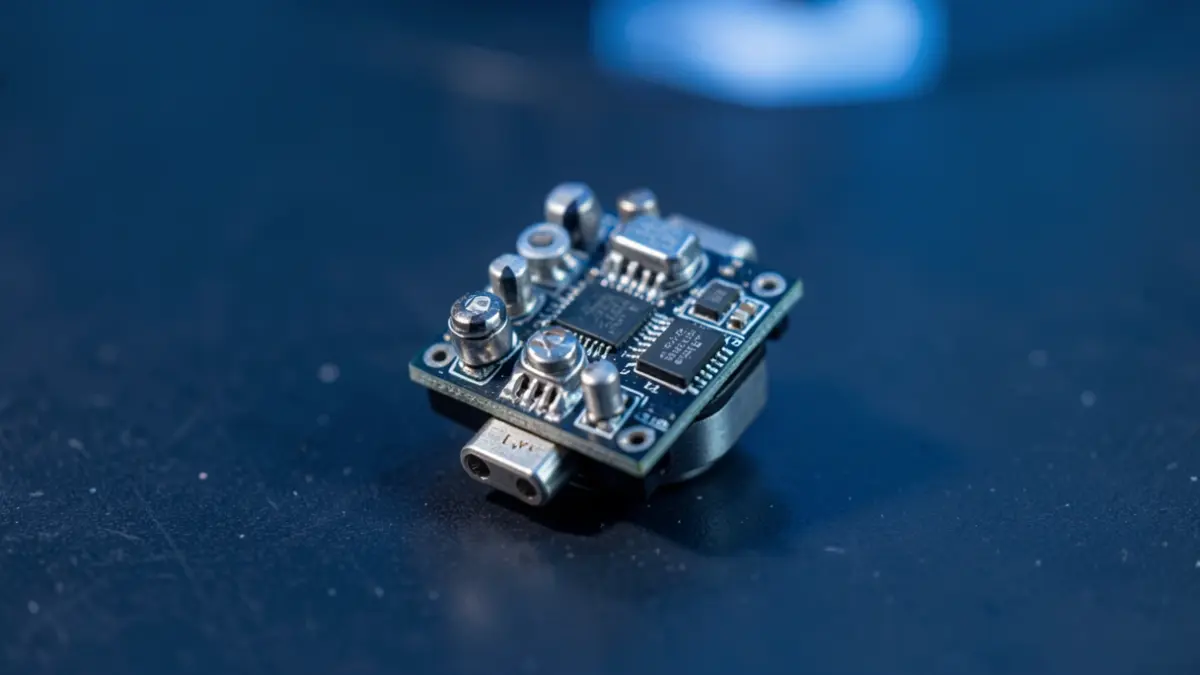
Among the innovations developed, the iEPC (Ion Electron Plasma Camera) instrument, resulting from 20 years of research, is the first capable of providing a hemispherical and quasi-instantaneous view of space plasmas. Thanks to a new optical topology made possible by 3D printing, it allows counting charged particles at high cadence and measuring their energy, speed and density. Other instruments, such as the induction magnetometer SCM and the electronic board Box-W, also benefit from the heritage of previous missions.
Beyond fundamental research, this space plasma physics has operational importance for space surveillance. The interaction between the solar wind and the magnetosphere can indeed produce electrical failures in satellites and network infrastructure, as well as disrupt communication and positioning signals. A demonstration version of these technologies should allow the acquisition of the first French sovereign data as early as 2028-2029.