
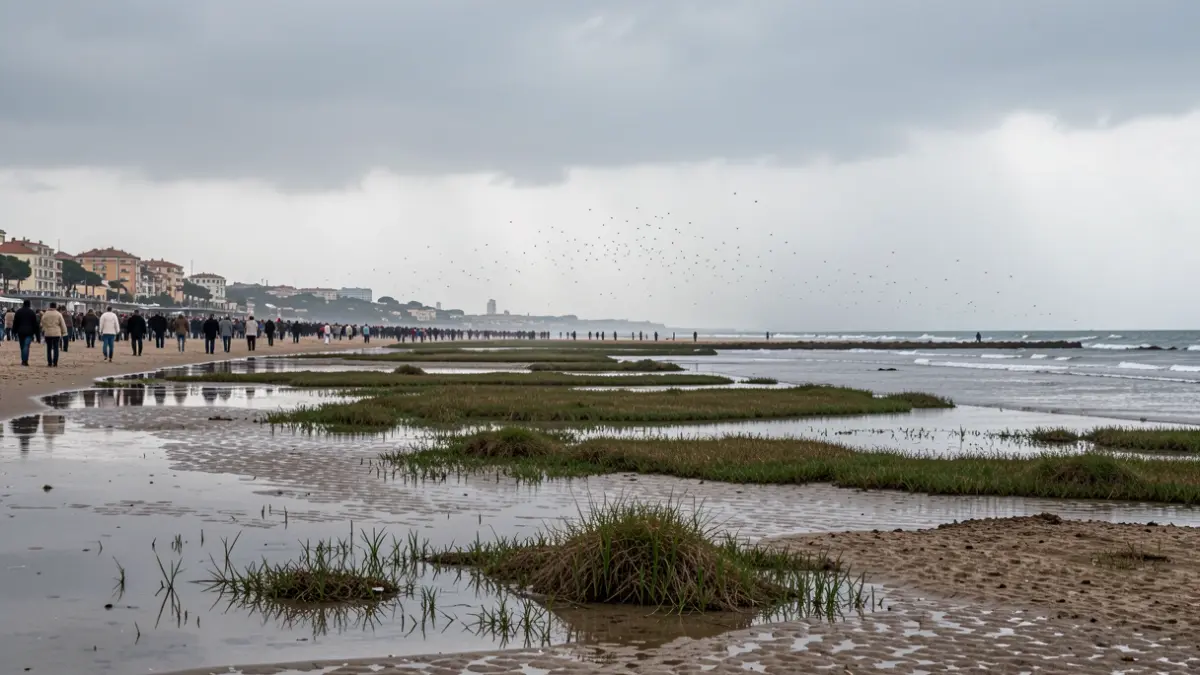
Despite a rapid mobilization of all its intervention resources by EID Méditerranée from October 1st to 9th, adult mosquitoes are currently causing significant nuisance. These weather conditions led to a rapid rise in water levels in coastal wetlands, triggering massive outbreaks of common mosquito species, mainly Aedes caspius and Aedes detritus.
EID Méditerranée teams combined aerial and ground methods to eliminate larvae before they transform into adult mosquitoes. Operations were adapted to weather conditions, sometimes limited by wind, fog, and cloud cover.
The organization explains that while treatment never eliminates 100% of larvae, the exceptionally high densities observed during this episode are sufficient to cause significant nuisance after emergence. Furthermore, the tiger mosquito remains active, and the rains have favored its development.
The nuisance is expected to gradually decrease with the natural disappearance of adult mosquitoes. EID Méditerranée continues to monitor wetland areas to limit the discomfort experienced by residents of the Mediterranean coast.