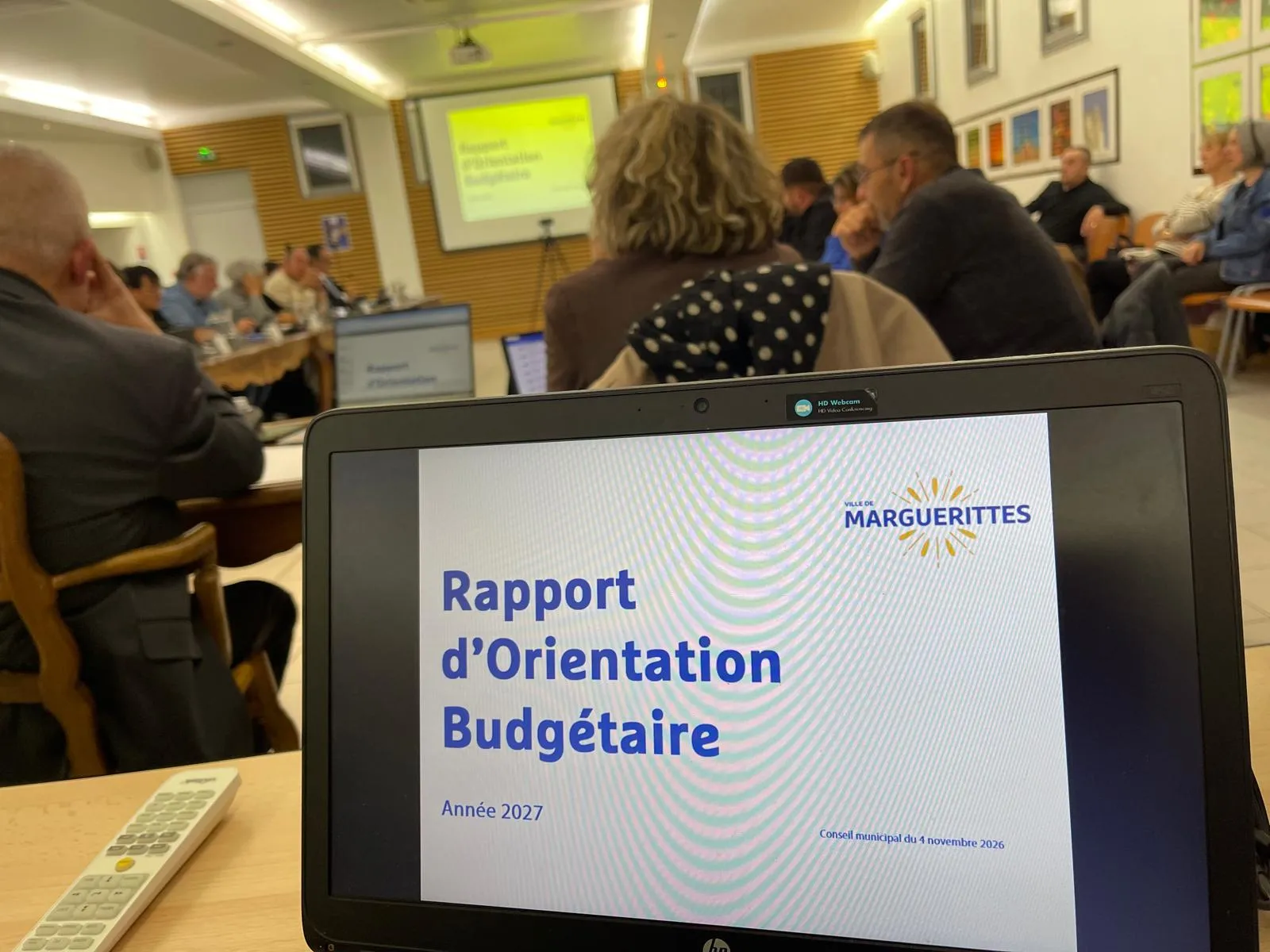
The public session of the Municipal Council on Wednesday, November 4th, included routine administrative matters and, more significantly, two crucial decisions for the future of the town and the daily lives of its inhabitants. These decisions align with the ambition to protect Marguerittes and its residents through the budgetary orientations for 2027 and upcoming years, as well as the new Local Urban Planning (PLU).
This new PLU was adopted on Wednesday evening following an extensive process of consultation, preparation, and validation that began in 2021. It involved numerous public meetings, citizen surveys, legal public inquiries, regulatory consultations with relevant services and institutions (known as Associated Public Bodies), and several debates and votes in the Municipal Council.
As announced and desired by the residents, this PLU aims to protect the town, its identity, and its balance by capping the population at 8,730 inhabitants by 2035 (down from 11,100 in the previous PLU), a limit of 9,000 residents that was favored by the public. Protection of natural, agricultural, and forest areas, as well as all green spaces, is also reinforced, as they are now classified as Zone N, making them entirely protected and non-buildable.
Protection of water resources and biodiversity is also a priority. Measures to safeguard the water table and drinking water sources are being applied in the Peyrouse area according to state requirements. The implementation of a biotope coefficient throughout the town mandates that construction projects must always include permeable, vegetated, and tree-lined areas. Furthermore, remarkable trees can no longer be cut down.
This PLU incorporates two major innovations: an 'urban nature' development program and a restriction of construction to the current urban zone. These initiatives are particularly groundbreaking nationally and reinforce the PLU's goal of ensuring Marguerittes remains a pleasant place to live.
The budgetary guidelines follow the same direction, which is particularly important given the current economic crisis. With no growth, high inflation, and expensive credit, the town recognizes it must rely on its own resources to maintain services, renovate buildings, and invest in its facilities.
To ensure the means to act in the coming years, the town has been implementing a budget strategy adapted to this new environment since 2025. In 2027, this will result in: 0 tax increases, 0 new borrowing, a €40,000 reduction in operating budget, and €2 million in investments. The trajectory for the next decade clearly outlines strict control over operating expenses, a significant reduction in debt, and substantial investment levels.