
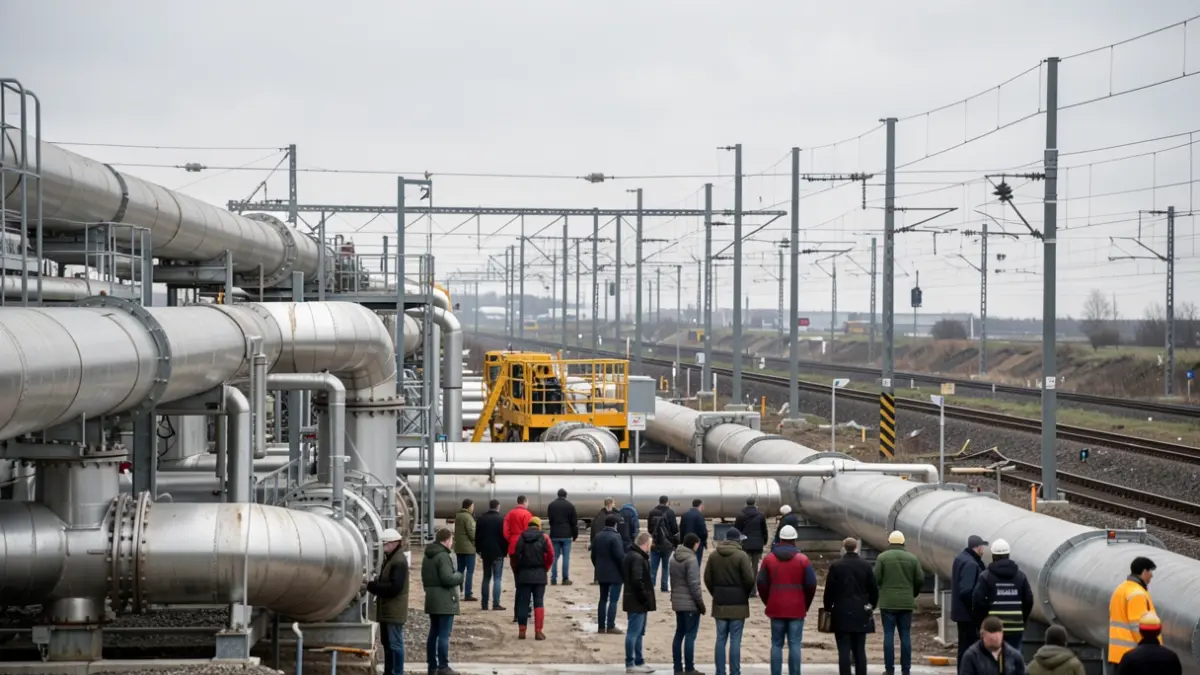
These interventions, concentrated over short, intensive periods, require temporary interruptions of rail traffic. The AFSB and AFNT, initial phases of the South-West New Line (LNSO), aim to adapt the existing network to accommodate more trains and improve daily travel. Launched in 2024, these projects are progressing in 2026 with the construction of new infrastructure.
The so-called 'exceptional' operations group several significant interventions to mobilize substantial human and technical resources, working simultaneously on tracks, overhead lines, signaling, platforms, and civil engineering or hydraulic structures. Prepared up to three years in advance, they allow teams to work safely and efficiently.
Three objectives guide this organization: concentrating resources for efficiency, carrying out multiple interventions in parallel, and minimizing impacts on passengers by scheduling these works during periods of lower traffic.
On the AFSB, between Bègles and Saint-Médard-d'Eyrans, operations support the creation of additional tracks and the adaptation of rail equipment. Upcoming interventions include November 21-26, 2026 (track, civil engineering, overhead line, and signaling works) and December 5-6, 2026 (track works at Bègles station).
On the AFNT, between Toulouse and Saint-Jory, works focus on building new tracks, modernizing facilities, and developing stations and halts. Upcoming operations are scheduled from November 21-27, 2026 (preparation for the partial commissioning of Castelnau-d'Estrétefonds terminus, track and overhead line works) and December 5-6, 2026 (track and overhead line works in the Launaguet road sector).
During these periods, rail traffic will be interrupted between Bordeaux and Langon, from Saturday, November 21 at 2:45 AM to Thursday, November 26 at 12:45 PM, and between Toulouse and Montauban, from Saturday, November 21 at 0:10 AM to Friday, November 27 at 5:40 AM. An adapted transport plan, including bus replacement services, may be implemented.
It is recommended to check schedules and traffic conditions on usual information channels, such as TER Nouvelle-Aquitaine, liO Occitanie, and SNCF Connect. Local mediators will be available to inform residents and answer questions.