
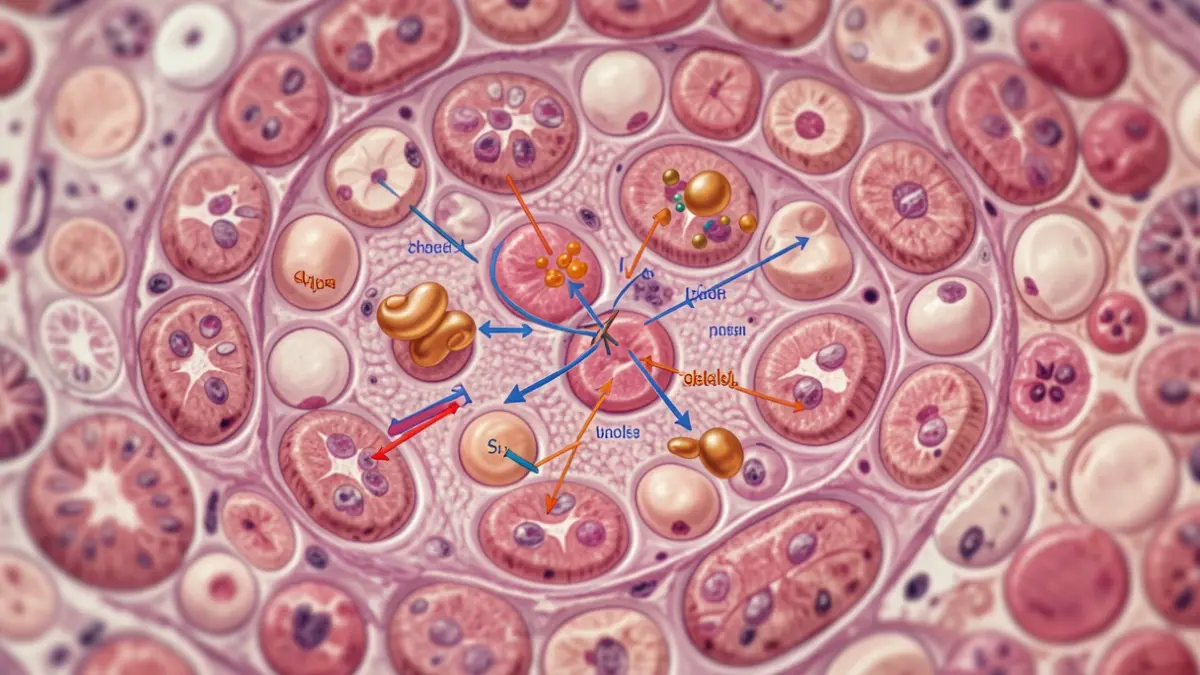
Advanced prostate cancers can develop in bones, an environment rich in fat cells. A study by the INOV teams at CRCT, led by Marc Poirot and Sandrine Silvente Poirot, reveals that bone marrow adipocytes actively participate in dialogue with cancer cells. These fat cells possess an enzyme, ChEH, capable of transforming cholesterol derivatives into a molecule called CT.
Prostate cancer cells can capture this CT molecule and convert it into oncostatin (OCDO). OCDO then stimulates the proliferation of cancer cells that no longer depend on androgens, by activating the glucocorticoid receptor. These results, published in J Lipid Res, reveal a previously unknown metabolic cooperation between these two cell types.
This discovery shows that an androgen-independent cancer can remain sensitive to other steroid-derived signals. It opens new avenues for understanding prostate cancer progression in bone marrow and suggests that epoxycholestanoid metabolism and OCDO production could be targets for future therapeutic strategies, particularly in the bone context.
These are preclinical results, with no immediate therapeutic application demonstrated. Future research steps include studying this pathway in additional models and clinical samples, evaluating the inhibition of OCDO production, and determining its relevance for bone metastases.