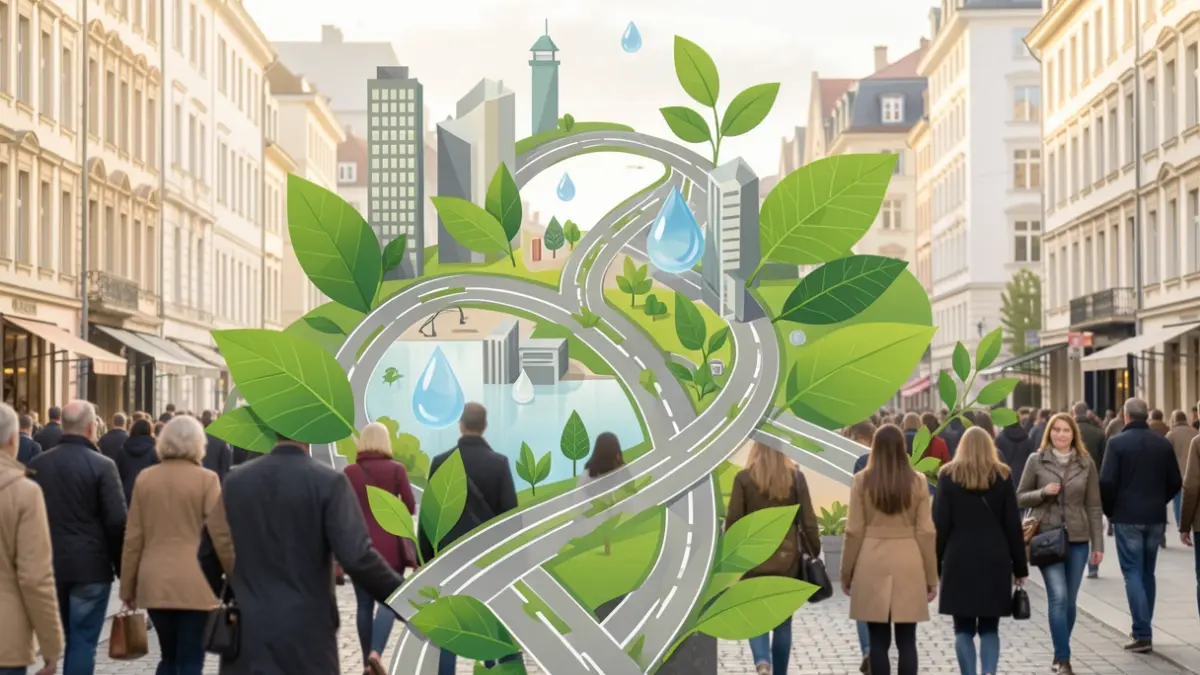
In the context of climate change and resource scarcity, rethinking the use of bioresources in cities is a major challenge. A prospective study by INRAE, as part of the BETTER metaprogram, explores possible futures for urban bioeconomy. It highlights a high probability of disparity in local trajectories and models due to the absence of a common national or European framework. To reflect this diversity, four contrasting scenarios have been developed.
Currently, cities consume large quantities of bioresources, generate significant waste, and emit greenhouse gases. Their water needs can also compete with those of neighboring rural areas. The INRAE study aims to explore how French cities could produce, use, transform, and valorize bioresources by 2050.
Several factors favor the development of bioeconomy, such as the circular economy and stricter regulations. However, a dedicated national or European strategy is lacking. Therefore, the role of local actors is crucial. Scientists have developed four scenarios for cities with over 50,000 inhabitants:
Valo-biodéchets (Waste Valorization): In a less favorable regulatory context, strategies are limited to optimizing existing infrastructure, focusing on valorizing biowaste into energy and fertilizers, often through large private operators. This scenario is compatible with many urban areas.
High-tech: A few large cities with solid financial and engineering capabilities adopt an ambitious strategy focused on innovative technologies and disruptive logistics, particularly for projects like vertical urban farms. This scenario can serve as a showcase for pioneering cities.
Indus-biosourcée (Industry-Biosourced): Europe favors industrial sectors based on primary biomass (wood, agricultural, marine) for new materials. Cities support these sectors but neglect the valorization of urban biowaste and urban greening.
Écologie territoriale (Territorial Ecology): A regulatory context favorable to ecological and energy transition, coupled with sensitized consumers, encourages nature-based solutions and food relocalization. Projects associating urban and rural areas promote shared governance and strengthen local ties.
These scenarios will likely develop differently based on local characteristics (financial capacity, urban-rural relations, economic dynamism). Multiple scenarios may coexist, especially if they are less dependent on national or European impulses.
Bioeconomy can be a strategic lever for transforming urban systems. The study identifies three priority research areas: better understanding and managing urban metabolisms, co-designing and experimenting with sustainable urban bioeconomy projects with local stakeholders, and fostering inclusive economic models and social transformations.
If the lack of a French or European framework persists, significant disparities in local urban bioeconomy trajectories are probable. This prospective study aims to help stakeholders develop a diagnosis, a shared vision, and an evolutionary path to build cities more attentive to their resources and capable of limiting their environmental footprint.