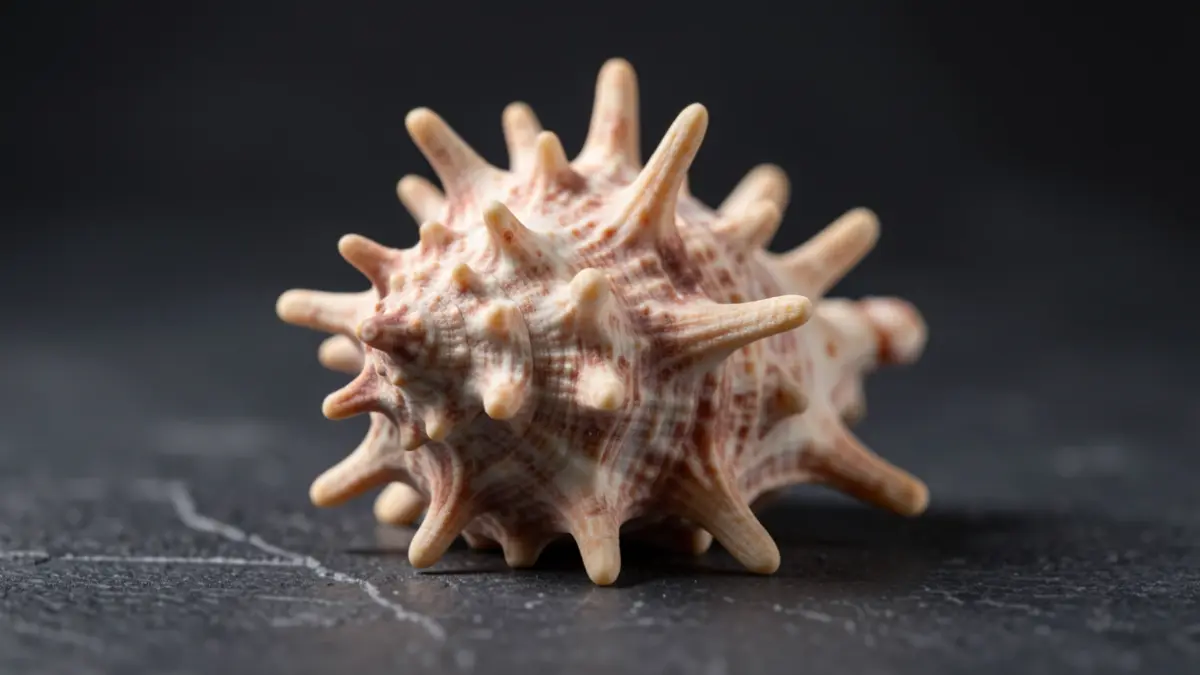
Shells, often seen as simple natural curiosities or records of mollusk life and their environment, reveal an unsuspected capability: preserving DNA. Trapped within the shell's mineral structure, these genetic molecules can persist for tens of thousands of years after the animal's death, thus offering a new perspective on the past.
This 'genetic memory' enables researchers to reconstruct mollusk population histories, track their evolution over time, and analyze their responses to environmental changes, whether natural or induced by human activities. Furthermore, shells can also contain genetic traces of other organisms present in the mollusk's environment, further enriching the available information.
The formation of the shell, a biomineralization process involving calcium carbonate and a fraction of organic matter, potentially traps DNA during its growth. Studies since the early 2000s have confirmed the possibility of extracting DNA from modern shells, including for rare or protected species, thereby minimizing the impact of sampling.
The preservation of this ancient DNA depends on various factors such as storage or burial conditions and the shell's microstructure. Under optimal conditions, such as in the frozen marine sediments of Siberia, DNA can be found in shells at least 100,000 years old, providing complete genomic information.
Analyzing this ancient DNA is particularly valuable for understanding recent biodiversity transformations in the face of increasing human pressures. For instance, it has revealed the genetic diversity of European flat oyster populations extinct in the 19th century and tracked the genetic evolution of California abalone before a population collapse in the 1980s.
Beyond the mollusk's own DNA, shells can also serve as 'metagenomic' archives, preserving traces of other organisms, such as bacteria. This helps reconstruct the history of diseases affecting mollusks, particularly in aquaculture, as demonstrated by the study of Japanese clam shells affected by brown ring disease.
Mollusk collections, such as those at the Muséum de Toulouse with nearly 100,000 specimens, thus become invaluable resources for genomics research, allowing new questions to be posed about the history of past populations and environments.