The project's steering committee, meeting on Monday, October 12th, reviewed the latest results, confirming the experimental device's potential to better preserve the region's freshwater resources. Launched in September 2024, the project aims to protect the Vise spring from 'inversac', a phenomenon where saltwater from the Thau lagoon enters freshwater underground aquifers.
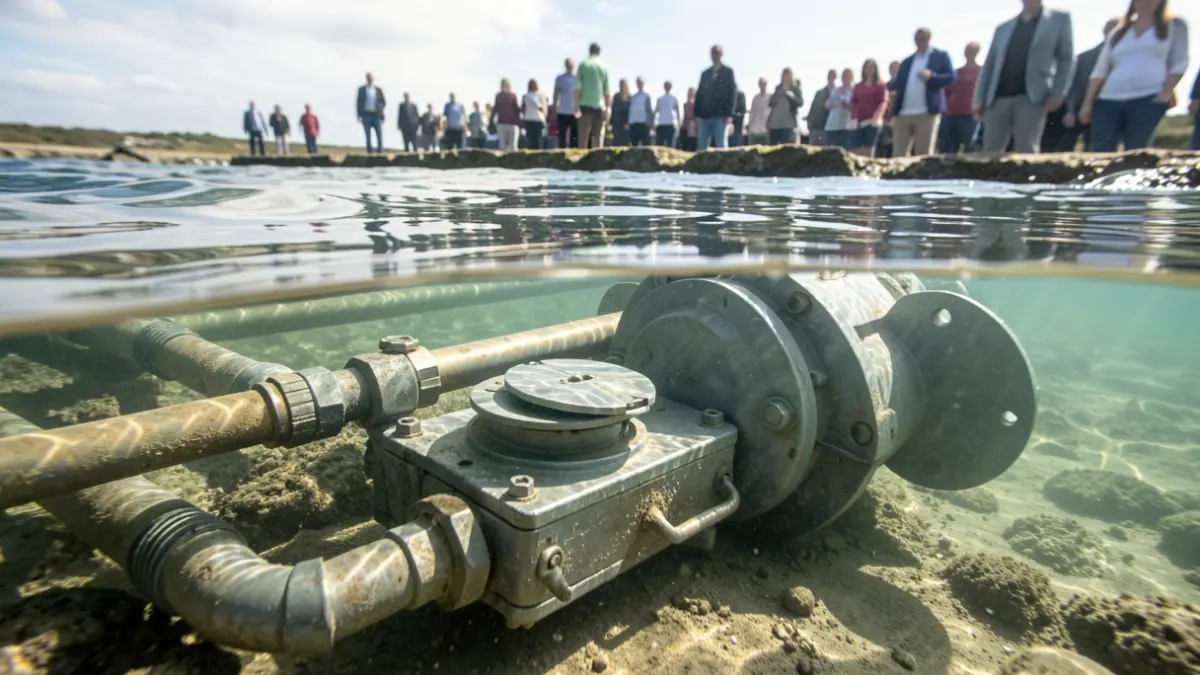
An experimental device has been installed at the bottom of the lagoon, directly on the spring, to control water flow and prevent saltwater backflow using a non-return valve system. Following a design and installation phase completed in October 2025, experiments continued in 2026. Abundant rains led the teams to study the possibility of slowing the spring's flow rate.
Results are promising: the device can reduce the spring's flow by approximately 20% under certain conditions without compromising its stability. This capability could help preserve groundwater reserves during drought periods. The device also withstood the high flows recorded in the spring.
Spring observations also revealed a second water outlet, independent of the main spring and not caused by the experimental device. This phenomenon will be specifically monitored. The next step involves installing and testing the non-return valve, which requires very low groundwater levels typically seen during significant droughts.
In the meantime, teams will continue monitoring the spring, maintaining measurement equipment, and collecting scientific data. This project, led by the SMBT, is financially supported by the State, the Occitanie Region, Sète Agglopôle Méditerranée, the municipality of Balaruc-les-Bains, and the SMBT.