The month of September was characterized by a significant rainfall deficit, bringing the cumulative rainfall since May to -50% in Perpignan-Rivesaltes and -70% in Saint-Paul-de-Fenouillet compared to reference values. This deficit is accompanied by maximum temperatures up to +5.6°C and minimum temperatures up to +3°C above average, extending an abnormally hot summer.
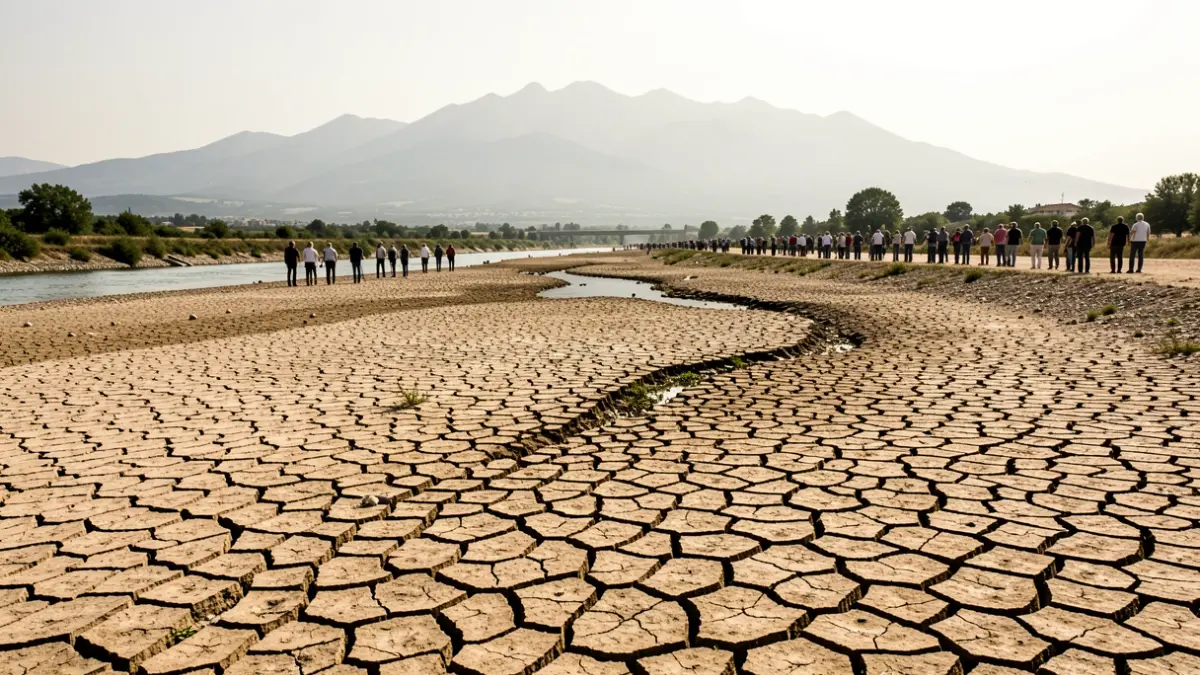
The hydrological situation shows contrasts. The Boulzane, Désix, and Maury rivers display the most degraded conditions with very low flows, even visible dry sections, limiting irrigation. The Verdouble is more favorable, while the Agly, downstream of the dam, sees its situation worsen with the appearance of dry sections following the reduction of summer flow support.
Average maximum temperatures over the last 7 days remain high, reaching 28.9°C in Saint-Paul-de-Fenouillet and 28.2°C in Perpignan-Rivesaltes, which is +4°C and +2.6°C above reference values. September rainfall totals remain low (-91% in St Paul, -79% in Perpignan), despite some localized episodes in mid-September. Precipitation is forecast for next week.
In the upstream sector, a slight improvement is observed on the Boulzane with a return of flow, although the flow remains very low and below the biological minimum of 130 l/s. The Désix shows 12 l/s at its confluence with the Agly (+20%), but remains degraded compared to the biological minimum of 30 l/s. The upper Agly has a flow of 251 l/s, below the biological minimum of 300 l/s.
The Verdouble maintains a stable situation, above the biological minimum flow, particularly at Padern and Tautavel where the flow has increased, albeit variably. The Maury is dry at its confluence with the Agly. Downstream of the Agly dam, the outflow has been reduced to 1300 l/s on September 16th to balance usage and dam stock preservation, leading to a drop in flow at Mas de Jau (472 l/s as of 15.09) and dry sections along the Agly.
The situation at Rivesaltes shows a degraded water appearance, likely a result of reduced flows and persistent heat. Regular monitoring is conducted by partners to adjust dam management.