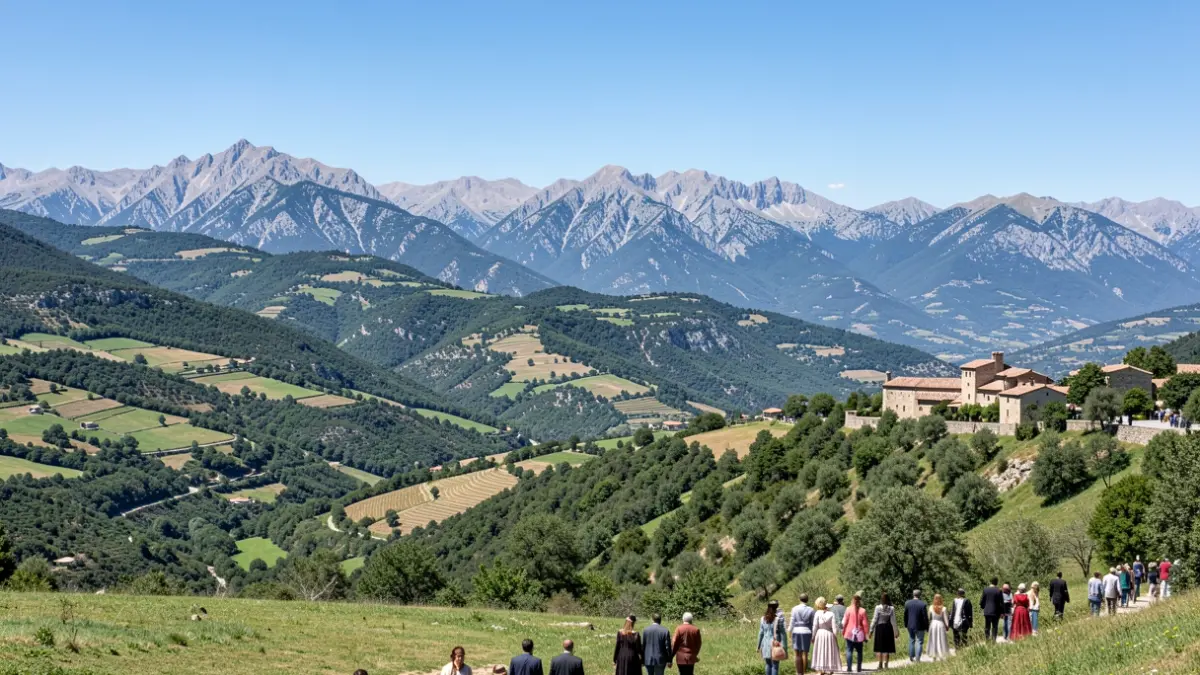
Nestled in the Catalan Pyrenees, the Jujols National Nature Reserve celebrates its 40th anniversary in 2026. A look back at the history and evolution of this reserve.
The history of the Jujols National Nature Reserve began in the 1960s with an ambitious National Park project, which was abandoned due to a lack of support. Faced with land acquisitions by banks, the need to protect biodiversity became a priority. The law of July 10, 1976, celebrating its 50th anniversary, enabled the official creation of the Reserve on October 23, 1986, protecting 472 hectares.
In 2011, the reserves of Jujols, Conat, and Nohèdes joined forces to form the 'National Nature Reserves of Mont Coronat'. This union of 3,158 hectares allowed for coordinated management, pooling of human and scientific resources, and better protection of the massif against climate change. Synchronized management plans and shared practices have strengthened ecological coherence.
The Reserve, co-managed by the French Office for Biodiversity and the Federation of Catalan Nature Reserves, has evolved its management practices. The 2019-2028 plan emphasizes knowledge, adaptive management for climate change, and the resilience of ecosystems. Over 2,800 species have been recorded, and significant environmental awareness work is carried out with schoolchildren, notably through the Olette Educational Terrestrial Area.
Today, the Jujols Reserve is a reference site for scientific experimentation, participating in national and cross-border programs such as BIOSCAN-FR (insect monitoring via DNA) and SONOSYLVA (ecoacoustics). It also contributes to the Floralab+ project for monitoring Pyrenean flora, with a particular focus on the rare species Viola parvula.
In 40 years, the Jujols National Nature Reserve has proven that a protected area can be a refuge for biodiversity, a place for research, experimentation, and local development. Facing current challenges, its role is essential, fostering dialogue with territorial stakeholders and looking towards the future to preserve and pass on this living heritage.