The heritage library of Carcassonne Agglo celebrates European Heritage Days by placing photography at the heart of its collections. In partnership with amateur practice students from Mathilde Veyrunes's course at the Fabrique des Arts, the institution explores the bicentenary of photography, a national event underscoring the evolution of this technique.
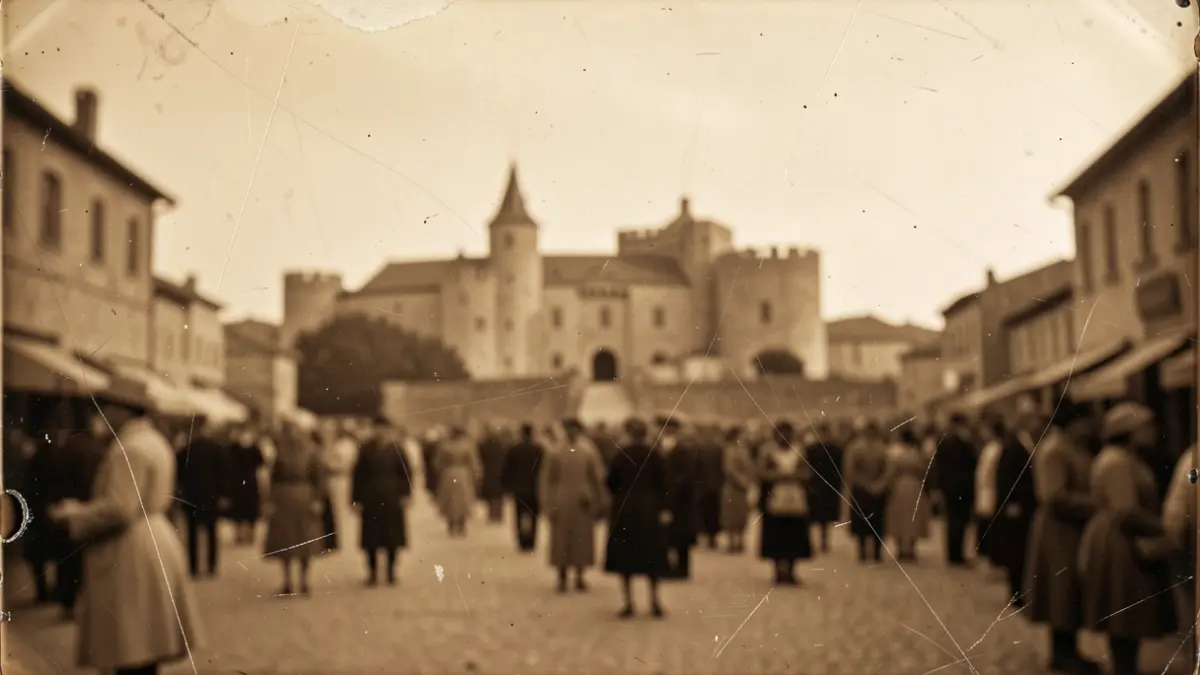
The exhibition "Heritage in Peril: Behind the Scenes of a Fragile Legacy" highlights conservation challenges. Photography, whether as documentary heritage, a substitute copy, or an artistic pretext, reinvents the past to create a living legacy. It has accompanied the transformation of the Cité de Carcassonne, from the early captures of fortifications by Léopold Verguet in the 1850s-1870s to the gaze of Michel Jordy in the early 20th century.
The article also references Walter Benjamin's reflections on the work of art in the age of mechanical reproduction. Photography and cinema, by multiplying images, have altered the relationship with the original work. Paradoxically, photographic supports, once matrices for reproduction, have become unique pieces to be preserved, acquiring their own aura.
Photography, having become heritage, is also an essential tool for its preservation. Whether through photographic reproduction, microfilm, digital photography, or high-definition digitization, the principle remains the same: create a double to protect the original. Digital images allow for the study and dissemination of content but struggle to convey the materiality and historical depth of the original support.
Students from the Fabrique des Arts, invited to photograph the collections and their alterations, have transformed the flaws of old documents into motifs, inscribing these objects into a new narrative. This interplay of gazes, where yesterday's photographs become heritage and today's creations document the past, underscores that heritage is what the present chooses to observe, conserve, and transmit.
In an era where artificial intelligence generates plausible but false images, the question of the trace is reinforced. While photography was long linked to reality through the presence of a subject before the lens, images can now bear all the signs of photography without sharing its origin. The article concludes by questioning what we will preserve of our present and how we will distinguish between trace and representation tomorrow.