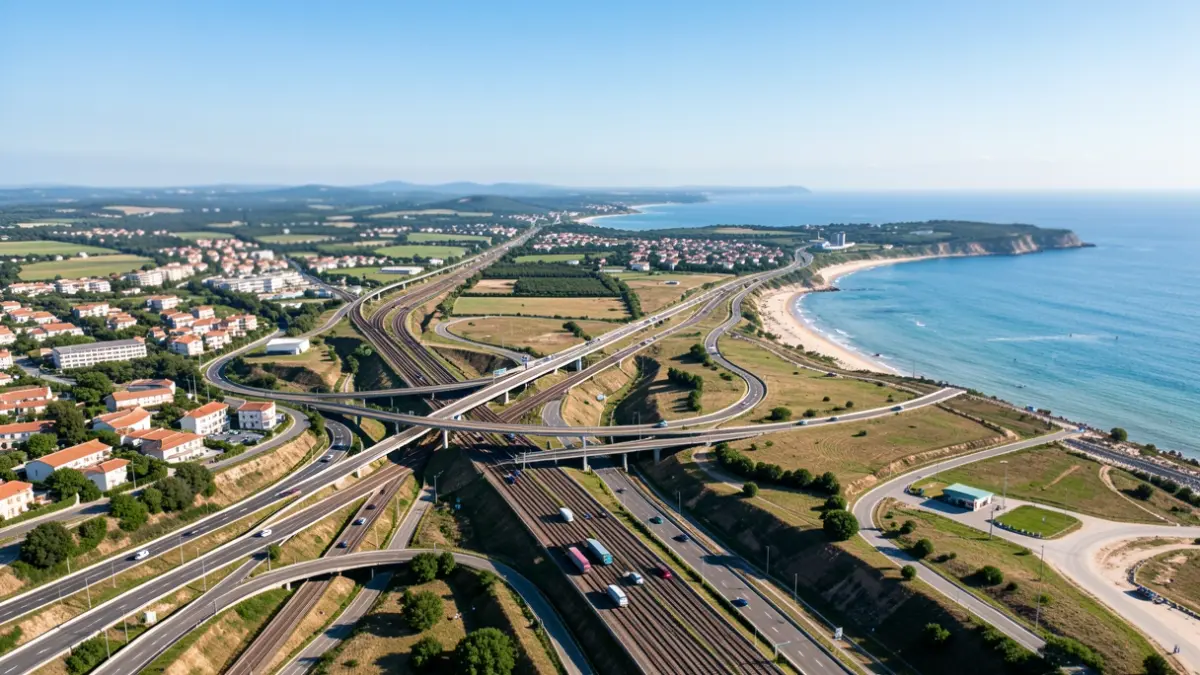
The Occitanie region, facing climate change challenges, sees its transport infrastructure – nearly 150,000 km of roads, 7,700 km of cycling paths, 2,500 km of rail network, and 220 km of coastline – at the heart of behavioral changes. The 2023 key figures report reveals notable trends.
Urban public transport journeys are experiencing significant growth. Within the Tisséo area (114 municipalities including Toulouse) and Sankéo (urban community of Perpignan), they have increased by over 7% compared to 2022. The ten main stations in the region show an average increase in ridership of 25.5%, with a peak of 36% for the Narbonne station in 2022.
Regarding new private vehicles, registrations in Occitanie have grown by 14%. Of these, 20% are electric (a 45% increase from the previous year) and 32% are hybrid (up 23% from 2022). Concurrently, heavy goods vehicle traffic on motorways is slightly declining, impacted by reduced consumption and new construction programs.
The port of Sète plays a major role, handling 77% of the region's maritime freight and welcoming 220,000 ferry passengers in 2023, a 31% increase compared to 2022. Air passenger traffic is intensifying across all Occitan airports, although it remains below 2019 levels.
These figures, painting a picture of transport in Occitanie – a territory spanning over 70,000 km² with more than 6 million inhabitants – highlight the challenges in maintaining, developing, and modernizing infrastructure, as well as the evolving mobility practices of users.