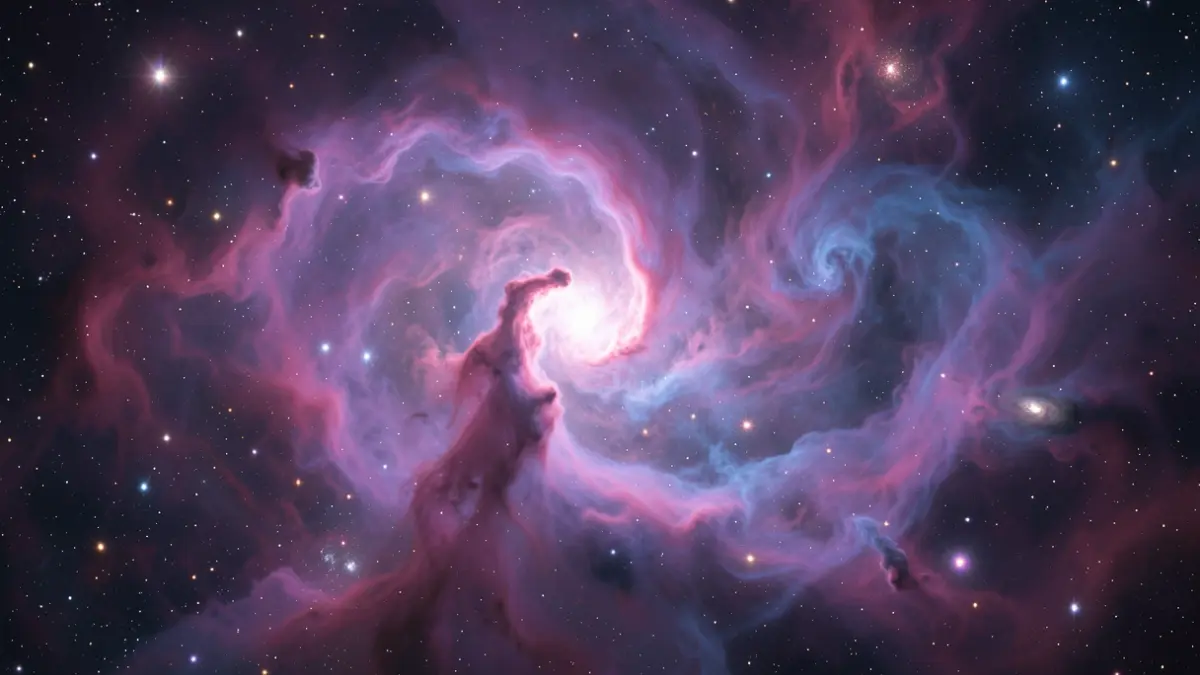
A major international program observing very young stars, involving scientists from the University of Toulouse and the CNRS, has yielded its initial findings. Data gathered by the ALMA radio telescope network, located in the Atacama Desert, Chile, has enabled the identification of molecules and their traces in areas where their presence was considered unlikely.
These discoveries, detailed in a series of seven articles published in Astronomy & Astrophysics on October 7, aim to clarify the origins of chemical composition variations observed among protostars. The central question of what constitutes stars in formation is at the core of the international COMPASS program (Complex organic molecules in protostars with ALMA spectral surveys).
The research team, including scientists from the Institute of Research in Astrophysics and Planetology (IRAP-OMP, CNES/CNRS/UT) and the Institute of Planetology and Astrophysics of Grenoble (IPAG, CNRS/UGA), utilized ALMA to observe eleven Sun-like protostars. These objects, representing immense masses of gas and matter aggregating over periods ranging from hundreds of thousands to several million years, cover different evolutionary stages and originate from varied environments.
ALMA's exceptional resolution allowed for the analysis of the internal regions of these systems, at scales comparable to the nascent Solar System. The spectral surveys conducted offer a dual benefit: a precise inventory of present molecules and a more robust determination of their abundances.
A significant finding concerns the deuteration of methanol (CH₃OH), studied in two protostars. 'ALMA's data allowed us to detect numerous deuterated forms of methanol,' explains Audrey Coutens, associate astronomer at IRAP and co-lead scientist of the COMPASS project. 'This highlights the efficiency of deuterium chemical fractionation in these environments. The first detection of fully deuterated methanol (CD₃OD) in one of the protostars appears particularly remarkable.'
The presence of CD₃OD, a species expected to be extremely rare due to the low cosmic abundance of deuterium, suggests that chemical reactions on the surface of interstellar ice grains can effectively lead to the formation of highly deuterated organic molecules at very low temperatures. This poses a significant challenge to current chemical models.
Furthermore, a methanol maser line was detected in over half of the studied sources. 'These maser emissions, which can be considered natural radio 'beacons', are produced by certain molecules when excited by shock waves in the gas forming stars,' explains Sébastien Maret, CNRS researcher at IPAG. 'They are common around massive forming stars, but were previously thought to be rare around Sun-like protostars.' The new observations indicate they might be much more frequent than anticipated, particularly in the youngest protostars.
These initial results represent a crucial first step. The full exploitation of the COMPASS dataset will continue to extend the analysis to all detected species and the eleven sources, aiming to understand whether the origin of chemical composition variations between protostars is explained by their environment or their evolution during stellar formation.