
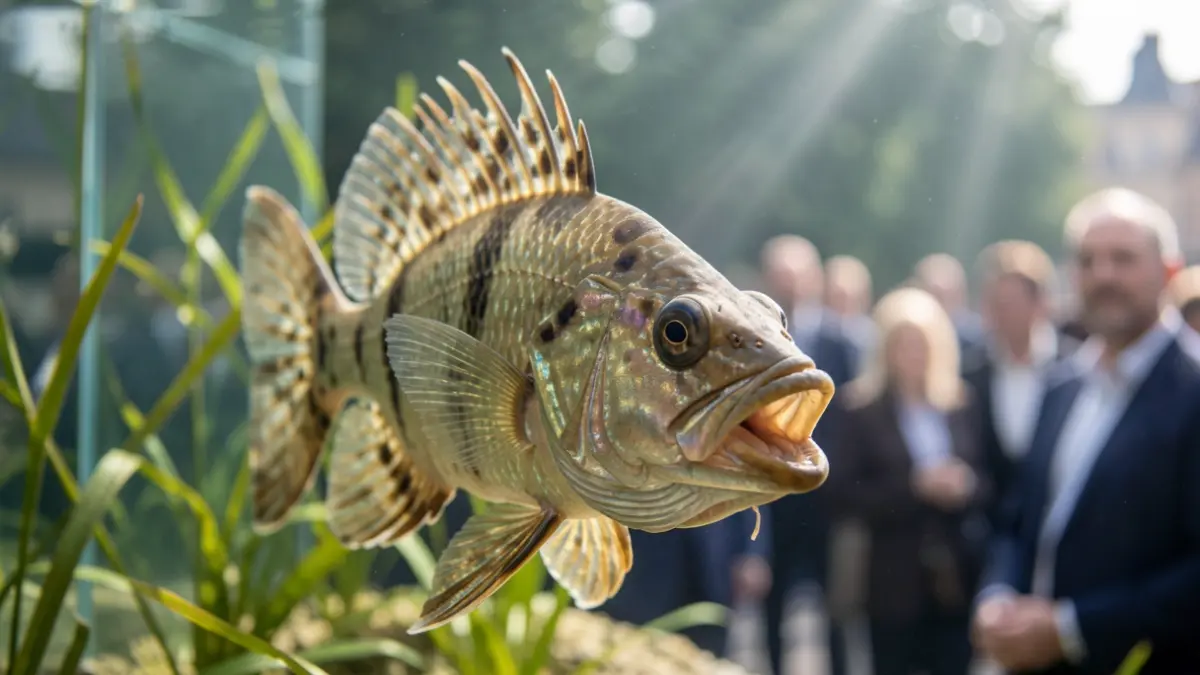
A quarter of the world's freshwater fish species are used by human societies for fishing, aquaculture, aquariums, and sport fishing. An analysis by the Biodiversity and Environmental Research Center (CRBE/OMP — CNRS / University of Toulouse / IRD / Toulouse INP) examined the morphology of nearly 9,000 fish. The results, published in Nature Communications on October 19, 2026, indicate that each use targets specific, often the most 'original' shapes, and that many of these species are threatened with extinction.
Scientists cross-referenced the FISHMORPH and FishBase databases to analyze eleven morphological traits of 8,970 freshwater fish species and their human uses. The 2,334 species used by humans (26% of species studied) represent 45% of the global range of freshwater fish forms, demonstrating a broad selection of 'ecological strategies'.
Each use favors distinct types of fish: sport anglers seek large predators with wide mouths, commercial fisheries exploit a broad spectrum, aquaculture favors large burrowing species, and aquariums select small species with large eyes.
The most concerning finding is the morphological 'originality' of the species used. Aquaculture and sport fishing preferentially target species with rare trait combinations. 'The species we use most are not 'ordinary' fish: they are often the most original from the perspective of their morphology, and therefore their ecological role. By targeting these species, many of which are already threatened, we risk losing ecological functions that nothing can replace,' explains Pierre Bouchet, a doctoral student at CRBE and lead author of the study.
Among the species used, 17% are currently threatened or near threatened with extinction. Their disappearance would lead to an erosion of the global spectrum of freshwater fish forms by 4.7%, four times more than if extinctions were random. This loss would primarily affect irreplaceable species such as sturgeons or large Asian catfish.
However, human uses can also protect. The common carp, threatened in its native range, has become widespread thanks to aquaculture. In Brazil, community management of arapaima fishing has led to an increase in its populations. The authors advocate for an evolution of conservation policies that integrate the functional dimension of species, beyond their threat status or trade volume.
'Integrating this functional dimension into international conservation policies... could help protect not only species but also the very mechanisms of ecosystem functioning on which our societies depend,' emphasizes Aurèle Toussaint, CNRS researcher at CRBE and study coordinator.