
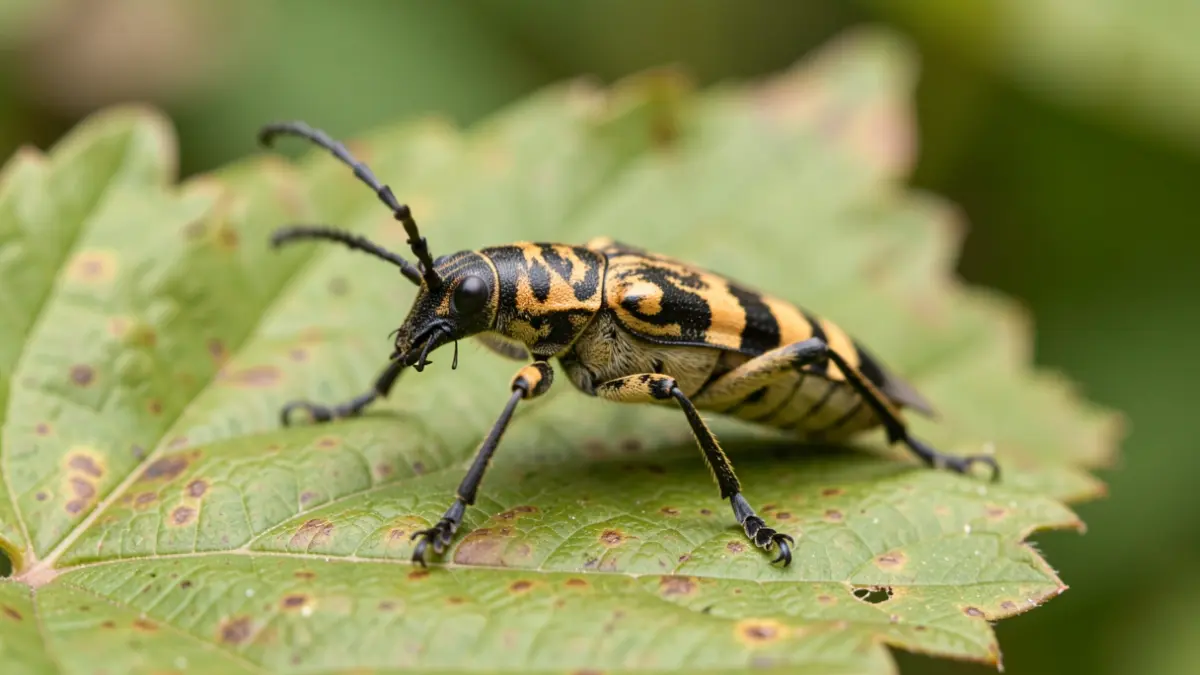
The tiger longhorn beetle, the common name for Xylotrechus chinensis, is a wood-boring insect whose first European outbreaks were detected in Spain in 2013. In France, it was first officially identified in 2018 in Sète (Hérault) and Le Bouscat (Gironde). Since then, the infestation has spread.
Currently, in Occitanie, 134 communes are officially infested. This progression is significant: from 1 commune in 2018, the number rose to 100 by the end of 2025. The situation is constantly evolving, with new contaminations detected regularly. The delimited zone, including the infested area and a buffer zone of 3 kilometers around the outbreaks, is likely to be revised annually.
To combat this threat to mulberry trees, particularly plane-leaf mulberries, control measures are recommended. Destroying infested vegetation by fine shredding or incineration is advised, ideally between November and April to prevent dissemination during the adult flight period. Transport permits for destruction can be granted by the DRAAF Occitanie under specific conditions.
Mechanical control is also an option: piercing the galleries with wire or copper to destroy larvae, then sealing the hole with arboricultural mastic. For owners who have declared their mulberry trees under a specific protection regime, treatment by injecting an authorized phytopharmaceutical product into the trunk can be applied by an approved company.