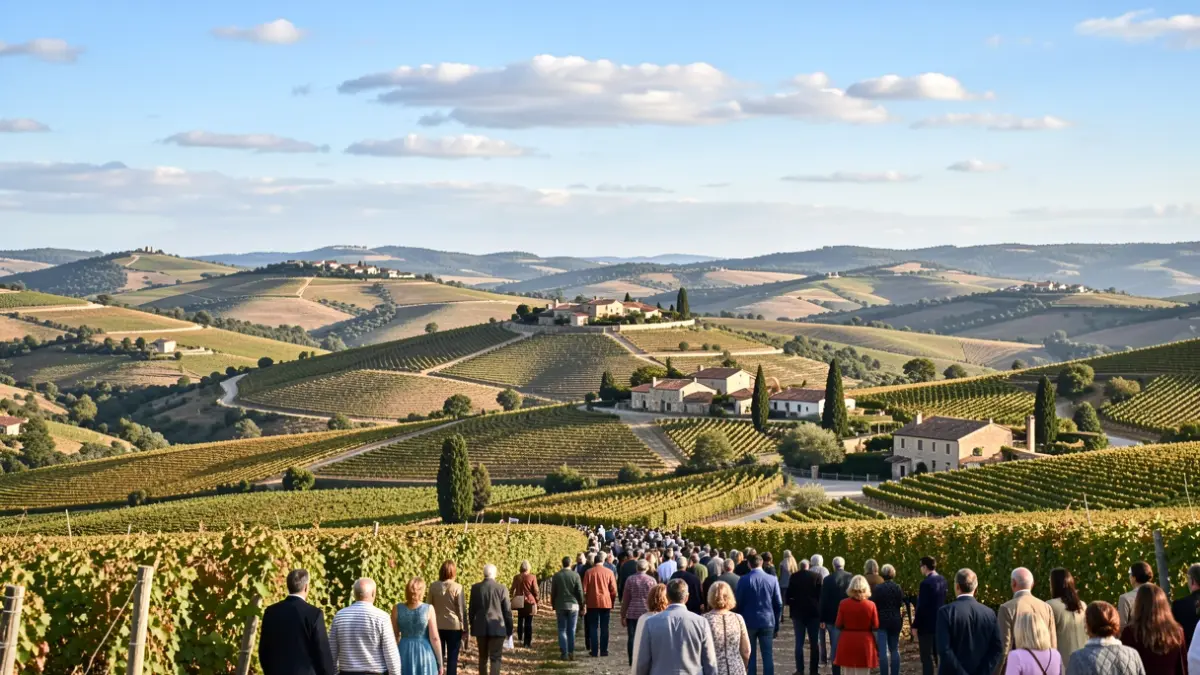
The result of reflection initiated in the early 2000s with agricultural stakeholders and territorial partners, the project "Haut-Languedoc Terres Nourricières" is deployed across the entire territory of the Park as well as in the communes of Azille (Aude), Paulinet, and Revel (Tarn). It is structured around 12 complementary actions.
The common ambition is to maintain a living and nourishing agriculture, strengthen local food self-sufficiency, and support the adaptation of agricultural production to climate change. Three major challenges guide this approach: combating agricultural decline by facilitating the establishment and transfer of farms, strengthening the territory's food resilience by bringing producers and consumers closer, and adapting agricultural production to climate change by promoting old and local varieties.
To preserve land and encourage new farm establishments, the project aims to create viable land units, facilitate farm transfers, and reclaim unused agricultural land. It also supports local elected officials in understanding the tools available to preserve agricultural land, promote its takeover, and consolidate existing farms.
Regarding food resilience, the project does not aim for total food self-sufficiency but seeks to progressively strengthen the territory's capacity to meet local food needs. Two objectives are pursued: fostering links between local producers and consumers, and increasing the quantity, diversity, and quality of local plant production for human consumption, particularly market gardening.
Facing climate change, Haut-Languedoc's agriculture must also strengthen its adaptation capacity. The project encourages the development of old, local, and hardy varieties, and promotes the return of trees in agricultural systems through agroforestry to create microclimates, provide shade, preserve soils, and improve resilience.
The 12 concrete actions include the mobilization of agricultural land, eco-clearing, agricultural test spaces, agroforestry, intensive market gardening, development of local supply chains (Lacaune bearded wheat, Anglès rye, Tarassac onion), networking local producers and retailers, and gourmet exchanges.
This project relies on significant cooperation dynamics between agricultural actors, local authorities, associations, and territorial development structures, including ADEART, Terre de Liens, the Chambers of Agriculture of Hérault and Tarn, the SAFER, and other local partners.